
Guides
How Much Does AI Video Cost? Pricing Breakdown
How much does AI video cost in 2026? Honest pricing breakdown: subscriptions, per-video costs, free tiers, and what creators actually spend per month.

On October 7, 2026, ShengShu Technology launched Vidu Q4 Preview — the first public preview of its next-generation flagship model for expressive audio and video. The headline upgrades are character performance, camera work, and visual effects, plus a reference system that's unusually generous: up to 15 image references and 3 audio references per generation, with output up to 4K in 10-bit color.
This matters because Vidu has been the quiet workhorse of AI video — strong on character consistency while flashier names grabbed the headlines. A flagship preview at aggressive launch pricing suggests ShengShu is now playing for the mainstream creator market, not just the research crowd.
A few honesty notes before we go on: this is a first look based on the launch announcement and product documentation, not a hands-on test — the model is days old, and it's explicitly a preview, so behavior and pricing can change before the final release. Launch pricing was announced; verify it on Vidu's official site before budgeting. And nothing here is sponsored — no tool paid for placement.
Q4 Preview is Vidu's next-generation model for generating video with expressive, in-character performances. The two pillars of the pitch:
Underneath, the reference capabilities are the real story for creators:
| Capability | Vidu Q4 Preview |
|---|---|
| Image references | Up to 15 |
| Audio references | Up to 3 |
| Output resolution | 2K or 4K |
| Color depth | 10-bit (over 1 billion colors vs ~16.7M in standard 8-bit) |
| Focus areas | Character performance, camera work, visual effects |
That 15-reference ceiling is the number that should catch your eye. Character consistency across scenes is the thing that breaks AI video workflows, and reference count is the lever that fixes it. Fifteen references is enough to pin down a character's face, outfit, style, and environment in one generation — compared to the 1–3 reference slots most tools offer.
10-bit color deserves a paragraph, because it quietly changes output quality. Standard 8-bit video displays about 16.7 million colors; 10-bit displays over a billion. The practical difference shows up in gradients — skies, skin tones, and lighting transitions get smoother instead of banding into visible stripes. If you're publishing to platforms that compress aggressively (read: all of them), starting from 10-bit gives your footage more headroom before compression artifacts set in.
Straight answer: Vidu announced launch pricing starting at $0.014 per second of generated video. At that floor rate, a 5-second clip costs roughly $0.07, and a minute of footage runs about $0.84.
But treat $0.014 as what it is — a promotional floor. Per Vidu's own pricing page, the list rate is $0.045/sec at 540p, $0.12/sec at 1080p, and up to $0.39/sec at 4K (2K lands in between). Image-to-video and reference-to-video get a 30% discount through November 30, and off-peak jobs bill at half price. So the headline "$0.014/sec" only reflects the launch promo; what you actually pay depends heavily on resolution and timing.
Two caveats that matter. First, the aggressive pricing is on the lowest tiers — running the headline features (4K, full reference loads) costs multiples of the floor rate. Second, this is preview pricing; the final model's pricing may shift. The direction is encouraging (flagship quality inching toward commodity pricing), but don't model a business on promo rates.
The positioning is clearly aimed at independent creators, small studios, and production teams working on narrative and commercial projects — ShengShu's own framing is that efficiency gains should give creators "the freedom to try one more shot or make one more version," i.e., iteration budgets that used to belong to studios only.
Good fit for: - Creators making character-driven content — narratives, shorts, ads — where expression and voice consistency across clips are the bottleneck. - Anyone whose workflow lives and dies by reference control: the 15-image / 3-audio reference budget is a genuine step up. - Small studios and production teams that need multiple attempts per shot without the per-second pricing punishing iteration.
Probably skip (for now) if: - You need an end-to-end agent rather than a clip generator — this is a model, not a production agent. Tools in the vivago R1 mold own the whole pipeline; Vidu generates the shots, you still direct the film. - You're on a tight budget and can't verify pricing yourself — preview pricing can change; confirm current rates on Vidu's official site first. - You need guaranteed consistency at commercial scale today — it's a preview. Run test generations before committing a client deadline to it.
Vidu Q4 Preview is the strongest signal yet that flagship AI video models are racing toward affordable iteration: a promotional $0.014/sec launch floor (list rate runs $0.045–$0.39/sec by resolution), 15 image references, and 4K 10-bit output is a combination that was studio-tier not long ago. If the character performance claims hold up in real use, this becomes one of the best clip generators for anyone whose content depends on people looking and sounding like themselves across scenes.
But "preview" is the operative word — watch for independent tests and final pricing before you reorganize your stack around it.
We'll update this guide as hands-on results come in.
Vidu Q4 Preview is the first public preview of ShengShu Technology's next-generation flagship AI video model, launched October 7, 2026. It focuses on expressive character performance, improved camera work and visual effects, with up to 15 image references, 3 audio references, and 2K/4K 10-bit output.
Vidu announced launch pricing starting at $0.014 per second of generated video — roughly $0.07 for a 5-second clip or $0.84 per minute at the floor rate. Actual costs may vary with resolution and reference usage, and preview pricing can change. Check Vidu's official site for current rates before budgeting.
Up to 15 image references and up to 3 audio references per generation — generous compared to the 1–3 reference slots most AI video tools offer. The audio references guide voice consistency and emotional delivery across generations.
The reference system rewards creators who already think in terms of characters and scenes, but the aggressive launch pricing makes it cheap to experiment. As with any preview model, start with low-stakes test generations before using it for client or deadline work.
How much does AI video cost in 2026? Honest pricing breakdown: subscriptions, per-video costs, free tiers, and what creators actually spend per month.
How to add AI voiceover to videos in 2026: a practical workflow plus 5 AI voiceover tools compared on voice quality, languages, pricing, and best use cases.
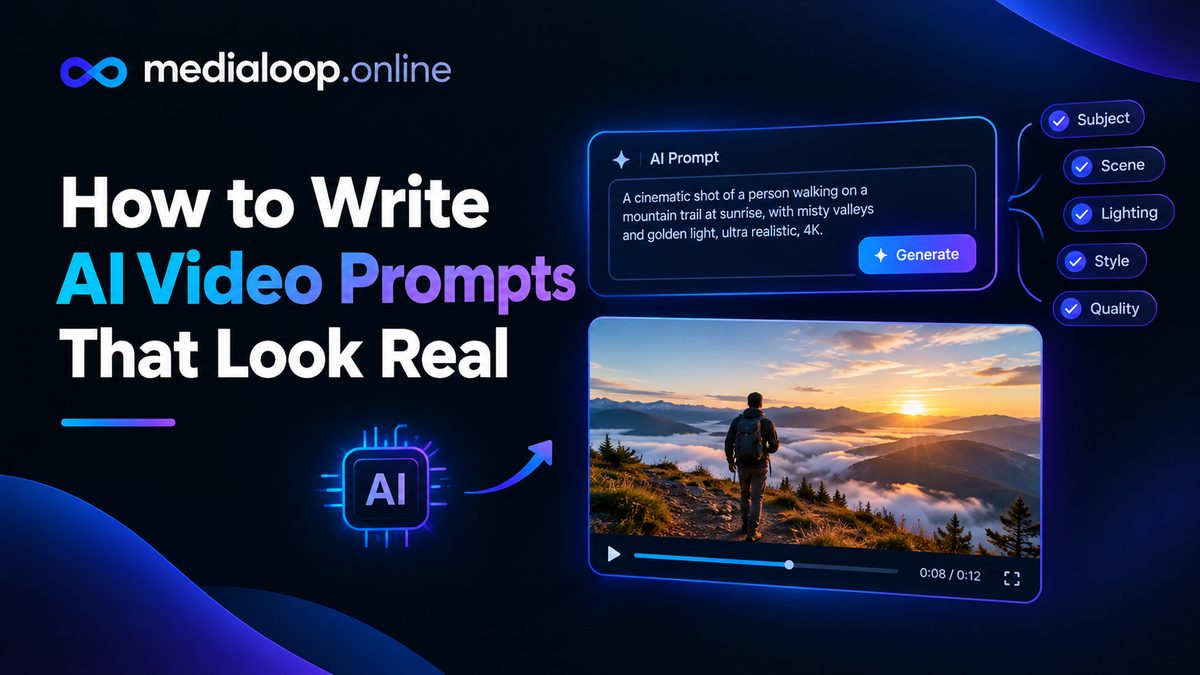
Learn how to write AI video prompts that look real: subject, motion, camera, lighting, and negative prompts. Practical prompting craft with examples for 2026.